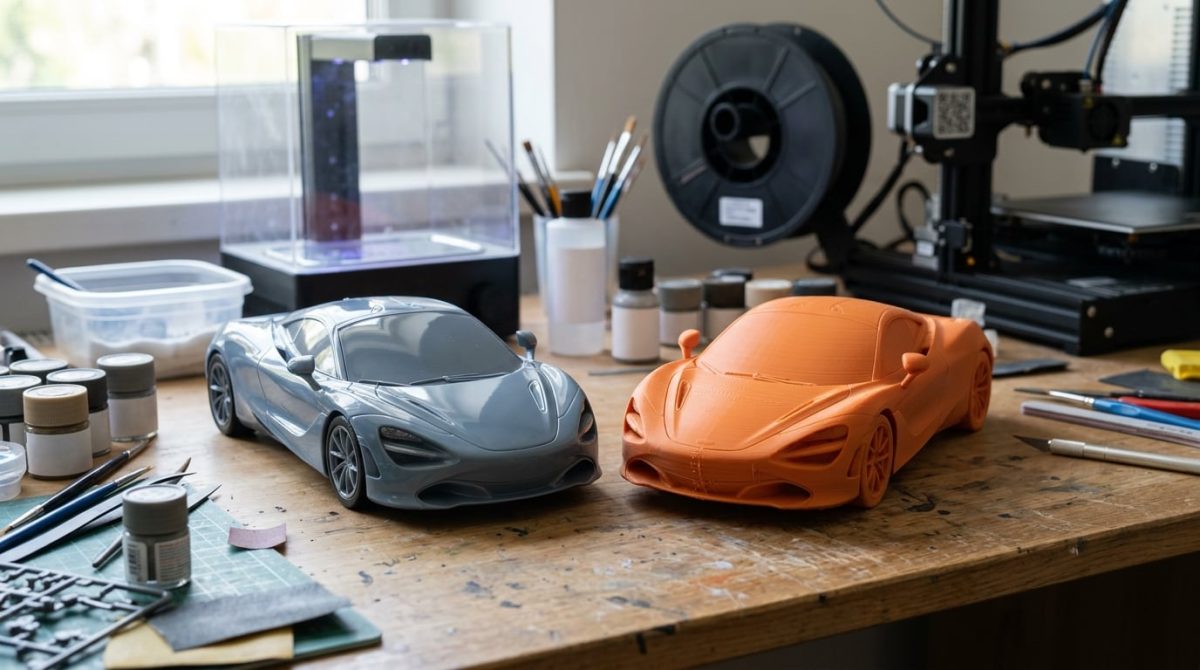



From 1957 Bel Airs to the mid-engine C8 Corvette, our Chevrolet STL collection spans seven decades of American automotive history in printable form.
Few brands offer the sheer range that Chevrolet does. In one catalog you can find a 1957 Bel Air cruising next to a mid-engine C8 Corvette, a square-body pickup parked beside a WWII armored car, and a bare V8 block sitting on the same shelf as a lowered custom truck. That diversity is exactly why building a Chevrolet STL collection is such a rewarding project for scale-model and 3D-printing hobbyists: one brand, endless genres, and decades of design language to explore with a single printer.
Whether you print in resin for maximum panel-line sharpness or in FDM for bigger display pieces, Chevrolet’s catalog rewards builders who like variety. Below we’ve rounded up eight standout designs from across the full Chevrolet STL collection, chosen to show just how far this lineup stretches — from chrome-laden classics to the engines that power them.
Seven Decades, One Bowtie
Our Chevrolet STL collection currently spans more than 50 individual designs across cars, trucks, military vehicles and engines.
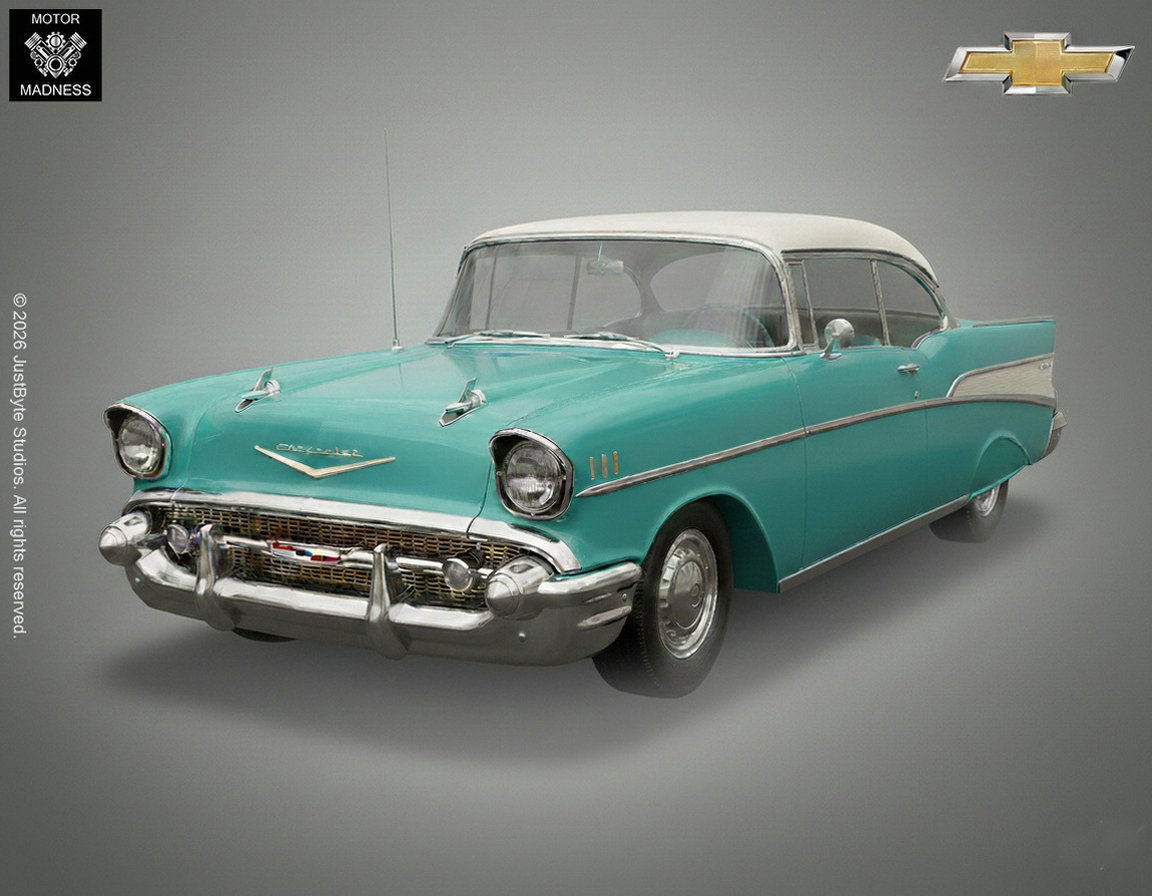
1. Bel Air 1957
The Bel Air 1957 is arguably the most recognizable American car of the 1950s, and no Chevrolet STL collection feels complete without it. Its jet-age fins, wraparound windshield and generous chrome trim make it a natural showcase piece for anyone who enjoys painting intricate two-tone schemes and polishing out chrome accents.
As a display model, it works equally well on its own stand or as the centerpiece of a mid-century diorama alongside period gas pumps or diner signage. The flowing body lines also make it a satisfying subject for primer-and-paint practice before tackling more complex builds.
2. Camaro SS 350 Coupe 1967
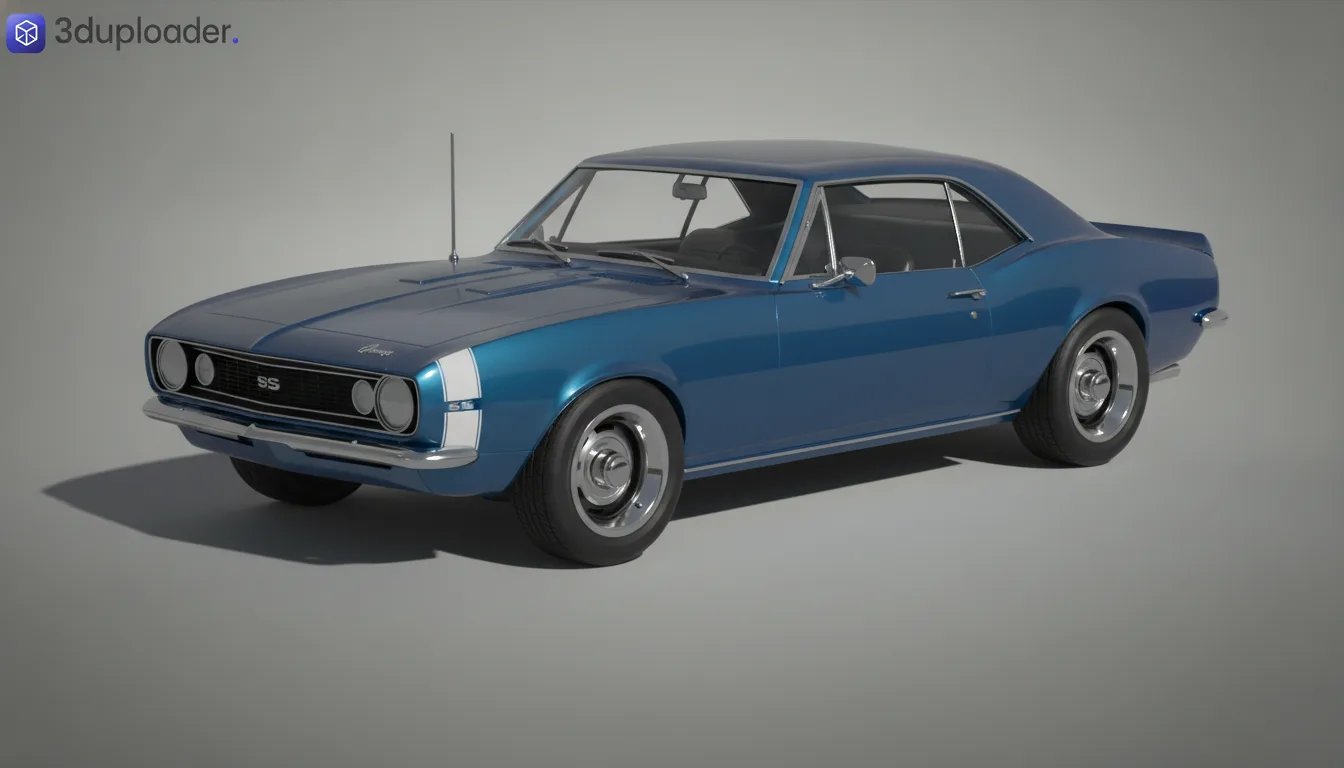
The 1967 Camaro SS launched Chevrolet’s answer to the Ford Mustang, and the SS 350 Coupe quickly became a muscle car icon in its own right. Its long hood, short deck proportions and bold SS badging capture the first-generation Camaro’s aggressive-yet-clean design philosophy.
This model is a great pick for builders who want a muscle car that reads well in a single, strong color — deep reds, blacks and classic Rally Green all suit the era-correct stripe kits available for this body style.
3. Suburban 1989
The Suburban 1989 represents the boxy, utilitarian styling that defined GM trucks throughout the 1980s. With its flat glass, upright grille and generous ground clearance, this square-body SUV is instantly recognizable to anyone who grew up around American trucks of the era.
It’s a strong choice for builders who want something larger and more utilitarian to balance out a shelf full of sports cars. The flat panels also make it an approachable subject for airbrushing woodgrain side trim or two-tone paint typical of period Suburbans.

4. Silverado 1500 Z71
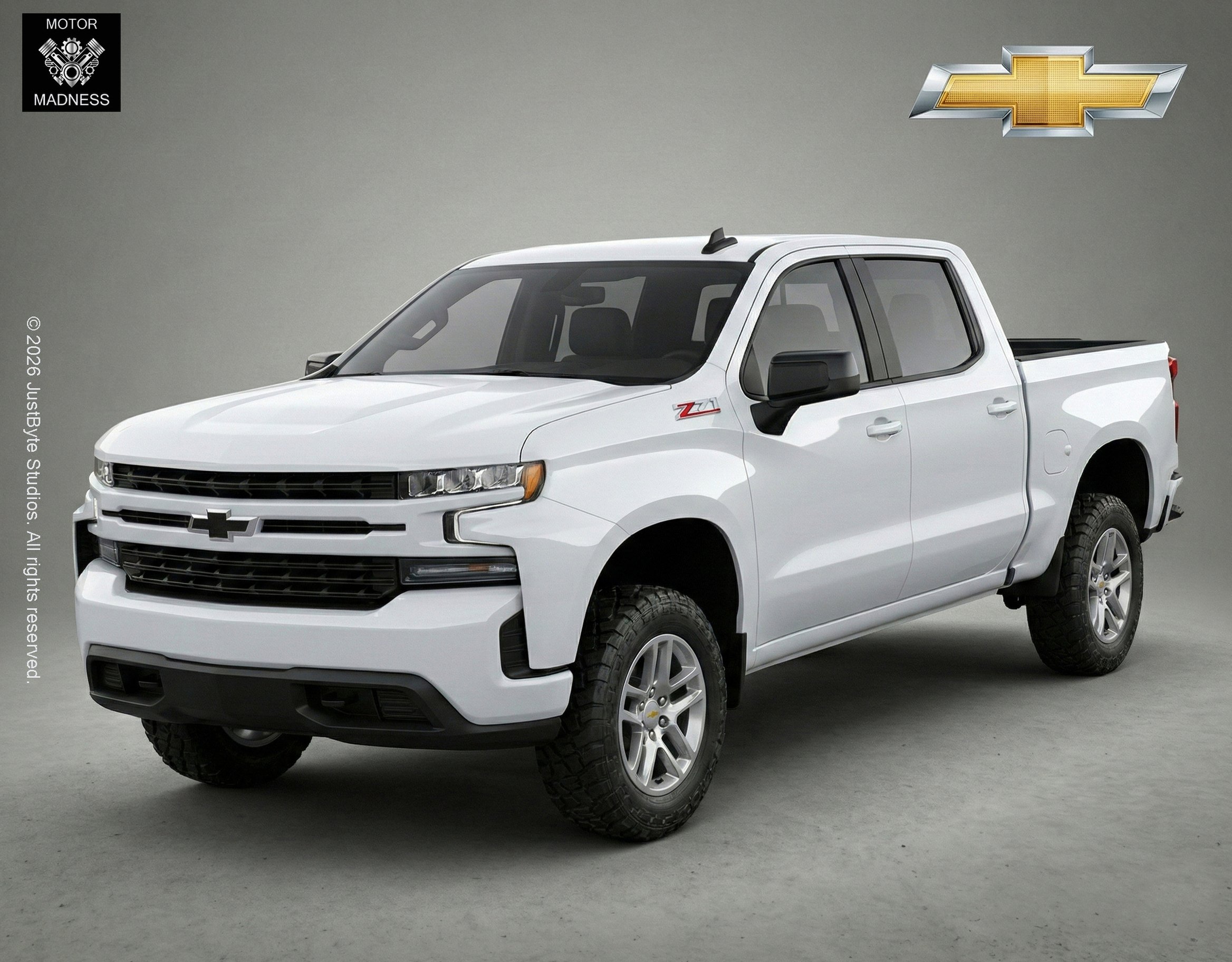
The Silverado 1500 with the Z71 package represents modern Chevrolet truck design: aggressive fender flares, all-terrain tires and a raised ride height aimed at off-road capability. It’s a useful counterpoint to the brand’s classic trucks, showing how far pickup styling has evolved.
Builders who enjoy weathering and mud effects will find this a satisfying canvas, since the Z71’s underbody and tire tread details are made for dirt, dust and splatter techniques that bring a work truck to life.
5. Corvette C8
The Corvette C8 marked a historic shift for Chevrolet’s flagship sports car, moving the engine behind the driver for the first time in the model’s history. Its low, wide stance and sharply creased bodywork represent a dramatic departure from every front-engine Corvette that came before it.
Pairing this model with one of the brand’s earlier Corvettes on the same shelf makes for a compelling side-by-side story of how the nameplate evolved across six decades, from chrome bumpers to carbon-fiber aero.

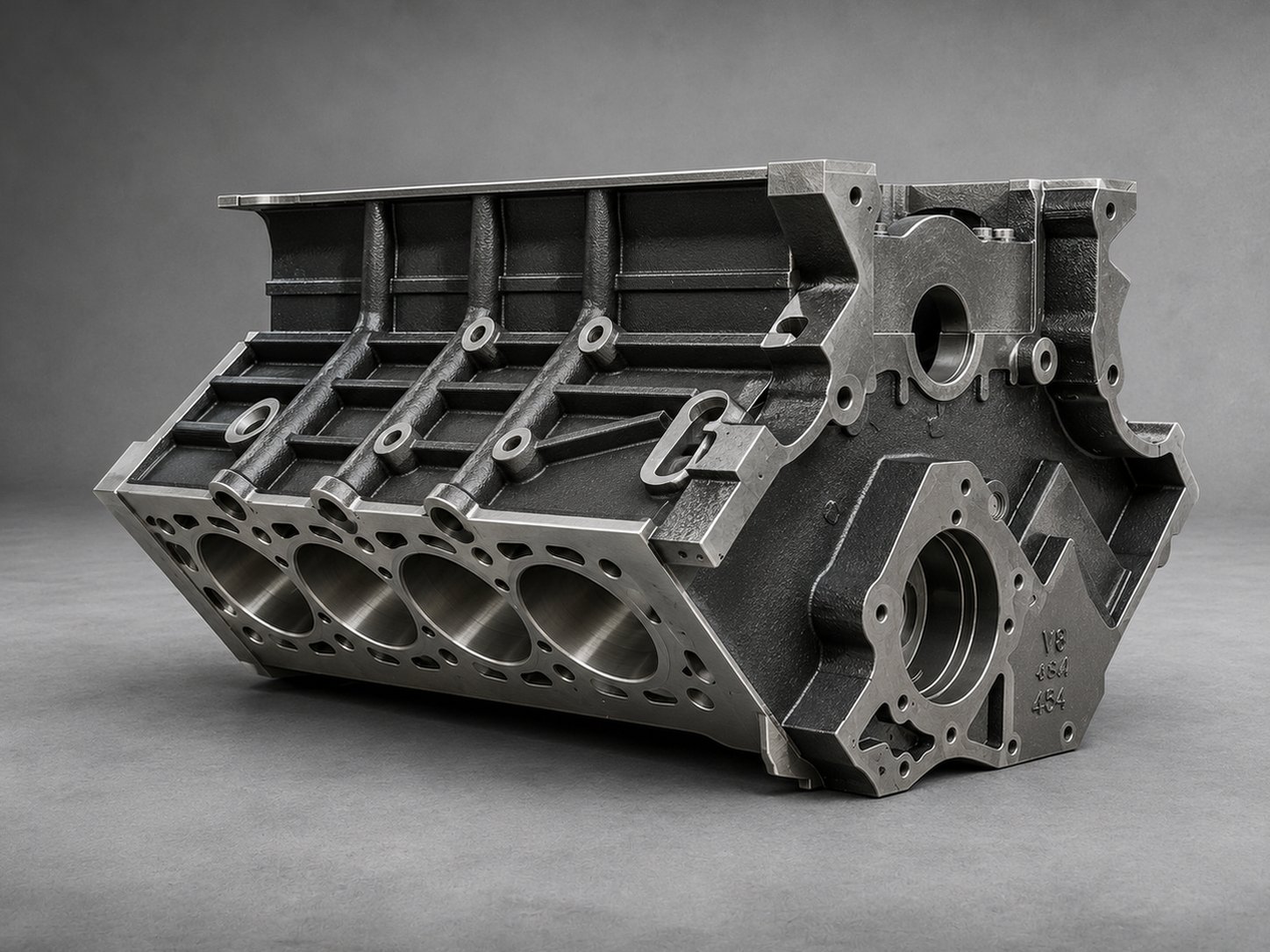
6. Big Block 454 V8 Engine
For builders who want to go beyond the body shell, the Big Block 454 V8 Engine offers a standalone look at one of Chevrolet’s most famous powerplants. This engine powered everything from Chevelles to pickups, and its cast-iron architecture, valve covers and intake details make for an engaging small-scale engineering project.
Displayed on its own stand, it’s a great way to practice metallic and oil-wash finishes without committing to an entire vehicle build — and it pairs naturally with any muscle car in the collection that shared this engine family.
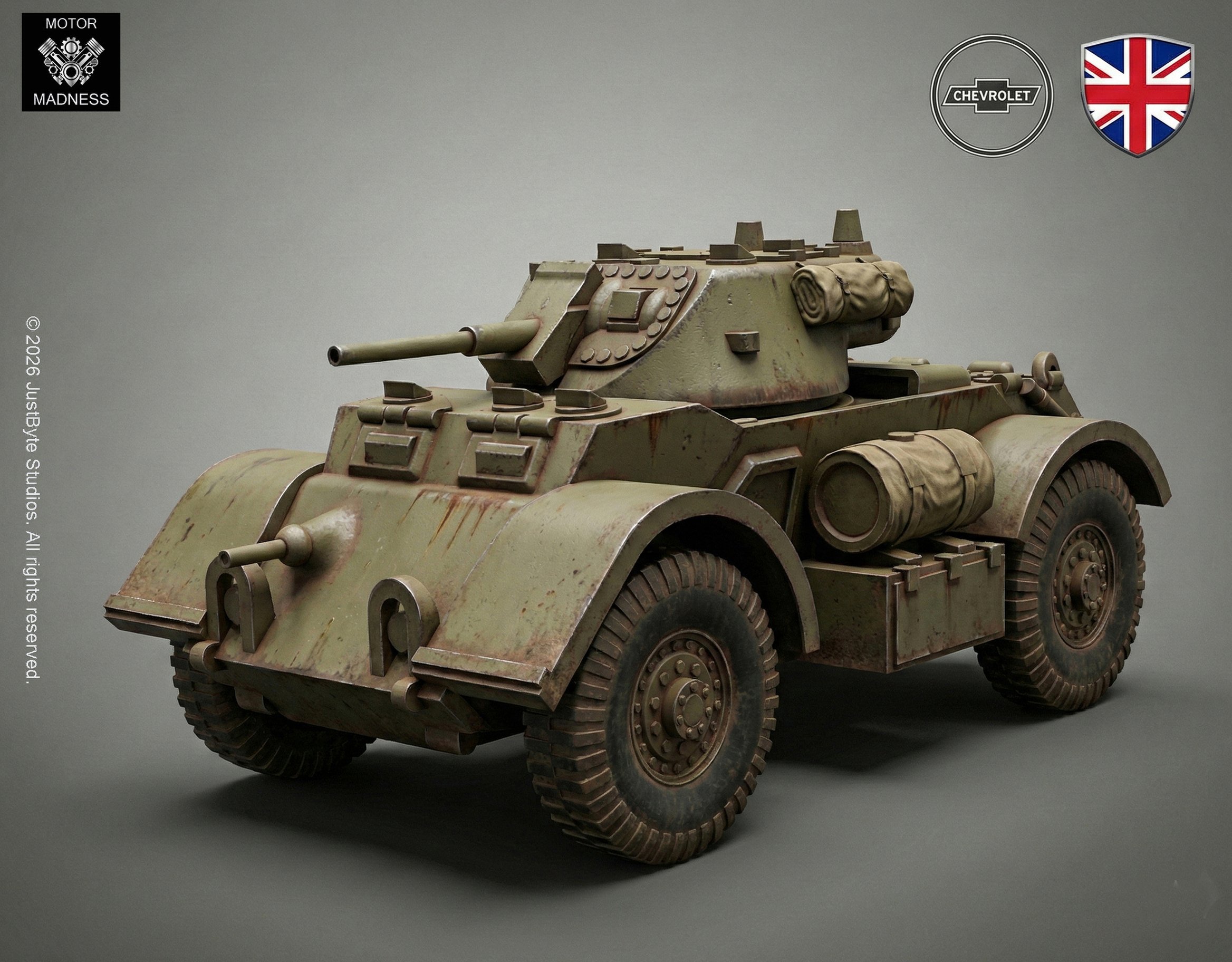
7. T17E1 Staghound Mk.I Armoured Car
The T17E1 Staghound Mk.I shows a very different side of Chevrolet’s engineering history: an American-built armored reconnaissance vehicle that saw extensive service with British and Commonwealth forces during World War II. Its riveted hull, turret and road wheels make it a rewarding subject for military modelers who normally work outside the automotive space.
Including a piece like this alongside Chevrolet’s civilian cars highlights the brand’s wartime industrial contribution, and gives collectors a natural entry point into military dioramas and weathering techniques.
8. C10 1966 Pickup Truck
The C10 1966 represents the clean, squared-off styling that made Chevrolet’s second-generation trucks so enduring among collectors and restomod builders alike. Its simple grille, flat hood and classic fleetside bed give it a timeless profile that works equally well bone-stock or customized.
This model suits builders who enjoy period-correct two-tone paint jobs or want a blank canvas for a lowered, custom-wheel restomod interpretation — a popular trend among real C10 owners that translates naturally into scale form.

Printing and Painting Tips for a Chevrolet Collection
Use a silver or chrome-effect paint over a gloss black basecoat for bumpers and grilles, then mask carefully for two-tone body panels typical of this era.
Pre-cut vinyl masks or hand-cut tape work well for SS stripes and hood call-outs; apply after the base color has fully cured to avoid lifting.
Smooth, large body panels show primer imperfections easily — wet-sand between coats and use a high-build primer before color.
Dry-brushing and oil washes bring out casting detail on engine blocks; a semi-gloss clear coat helps separate metal and rubber components visually.
For larger truck and SUV bodies like the Suburban or Silverado, orient panels to minimize visible layer lines on the hood and roof — the flattest, most visible surfaces on these vehicles.
- Print test fit for separate body, chassis and wheel parts before final gluing
- Use a lightweight filler primer to smooth any resin print lines on curved fenders
- Reserve high-detail resin printing for engines and small trim pieces where accuracy matters most
- Consider a satin clear coat for trucks and a gloss clear coat for sports cars to match real-world finishes
Frequently Asked Questions
What scale are these Chevrolet STL models designed for?
Scale varies by design since each model in the Chevrolet STL collection is created independently. Check the individual product listing for any scale or sizing guidance before printing.
Can I print these models on an FDM printer, or do I need resin?
Both methods work well depending on the design. Larger vehicles like trucks and SUVs often print cleanly on FDM printers, while smaller, highly detailed pieces like engine models or trim-heavy classics tend to benefit from resin’s finer resolution.
Which Chevrolet model is best for a beginner painter?
Classic designs with large, flat panels — like the Bel Air 1957 or C10 1966 — are more forgiving for beginners since they have fewer complex curves and simpler color-blocking opportunities.
Are the engine models compatible with the vehicle models?
The engine designs are created as standalone display pieces rather than drop-in components for specific vehicle files, so they’re best enjoyed as separate builds rather than assumed to fit a particular body shell.
Is this the complete Chevrolet lineup available in the store?
This roundup highlights eight designs from a much larger Chevrolet STL collection. Browse the full Chevrolet brand category in the store to see everything currently available, from additional muscle cars to more engine and truck options.
Final Thoughts
A brand-focused shelf has a way of telling a story that mixed collections can’t quite match, and Chevrolet’s catalog gives you an unusually wide story to tell — from tail-finned 1950s cruisers to mid-engine supercars, armored wartime vehicles and the V8s that tie it all together. Whichever era or category you start with, building out a Chevrolet STL collection one print at a time is a project that can keep growing for years.