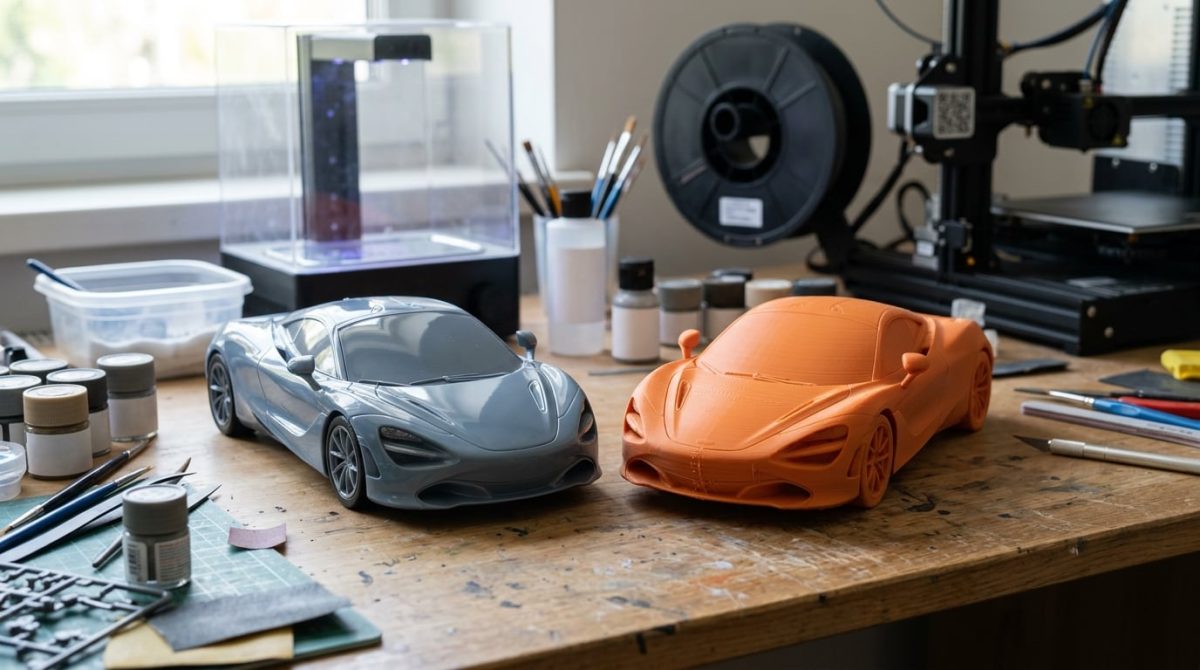



A hand-picked roundup of 1960s-1970s muscle car STL models, from the Hemi Cuda to the Boss 302, ready for your resin or FDM printer.
There’s something irresistible about the golden era of American muscle: thunderous V8s, long hoods, and bold stripes that screamed power long before the engine ever turned over. For scale-model builders and 3D-printing hobbyists, this collection of muscle car STL models brings that whole era back to the workbench, letting you print, sand, and paint your own slice of 1960s-1970s Detroit iron without hunting down a discontinued injection-molded kit.
Whether you print in resin for crisp body lines and tight panel gaps or in FDM for a bigger display piece, these designs capture the proportions and details that make muscle cars instantly recognizable: aggressive stances, scooped hoods, and fastback silhouettes. This roundup gathers six of the best muscle car STL models currently in the store, spanning Mopar, Ford, Chevrolet, and Pontiac.
Six decades-defining builds, one print queue
From Pontiac’s original GTO spirit to Mopar’s HEMI legends, this lineup covers the cars that defined an era.
The lineup
1. Hemi Cuda
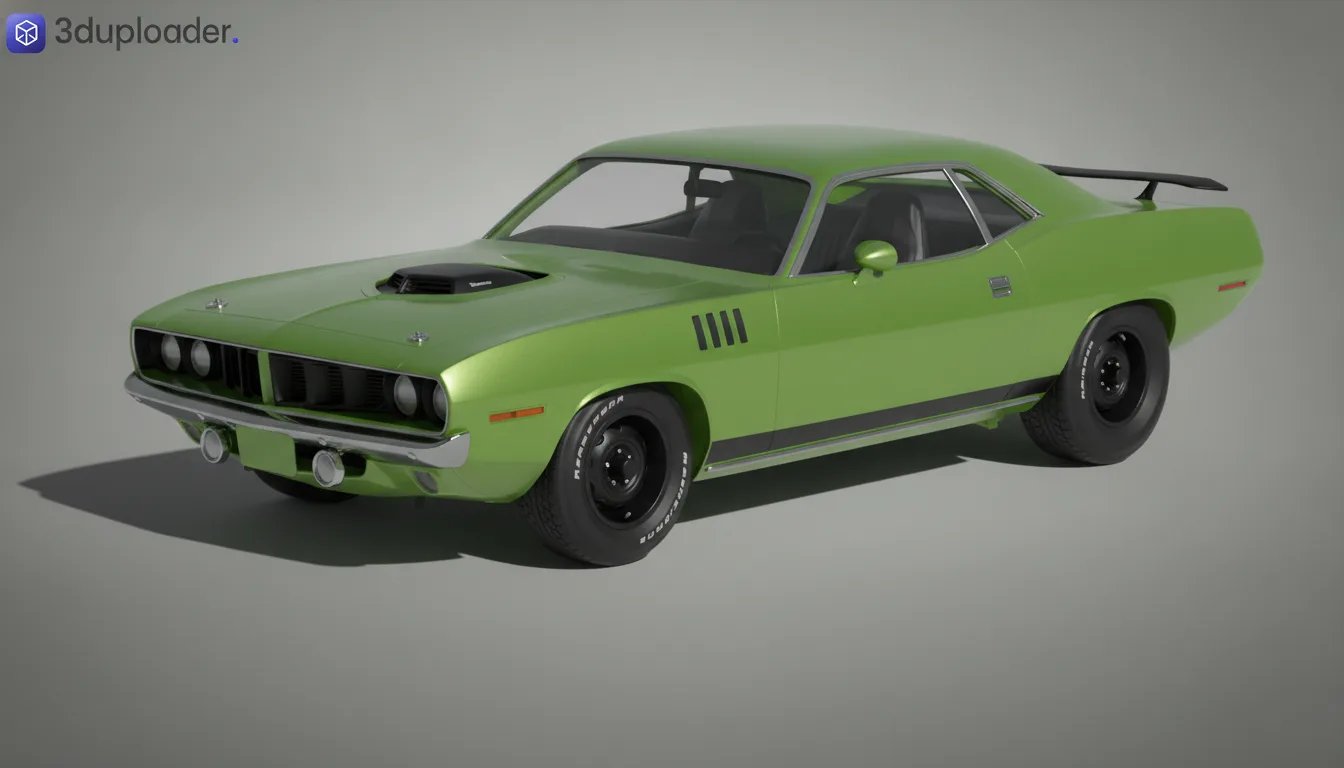
The Plymouth Barracuda reached its peak in 1971 with the Hemi Cuda, one of the most sought-after muscle cars ever built. Styled with aggressive fender flares, a shaker hood scoop, and bold "billboard" graphics, it remains a benchmark for E-body Mopar design.
This design captures the car’s wide stance and sculpted body lines, making it a strong centerpiece for any collection of American muscle miniatures. It pairs naturally with other Mopar builds for a themed display shelf.
2. Mustang Boss 302
Built to homologate Ford’s racing efforts in the SCCA Trans-Am series, the Boss 302 combined a high-revving small-block V8 with sharp handling, making it one of the most respected performance Mustangs of its generation. The 1970 model added a distinctive hockey-stick stripe and a more aggressive front spoiler.
This STL translates that race-bred character well, with crisp front fascia details and the fastback roofline that defines the first-generation Mustang silhouette. It’s an excellent choice for builders who want a Mustang with genuine motorsport pedigree rather than just straight-line power.

3. Chevelle SS 454
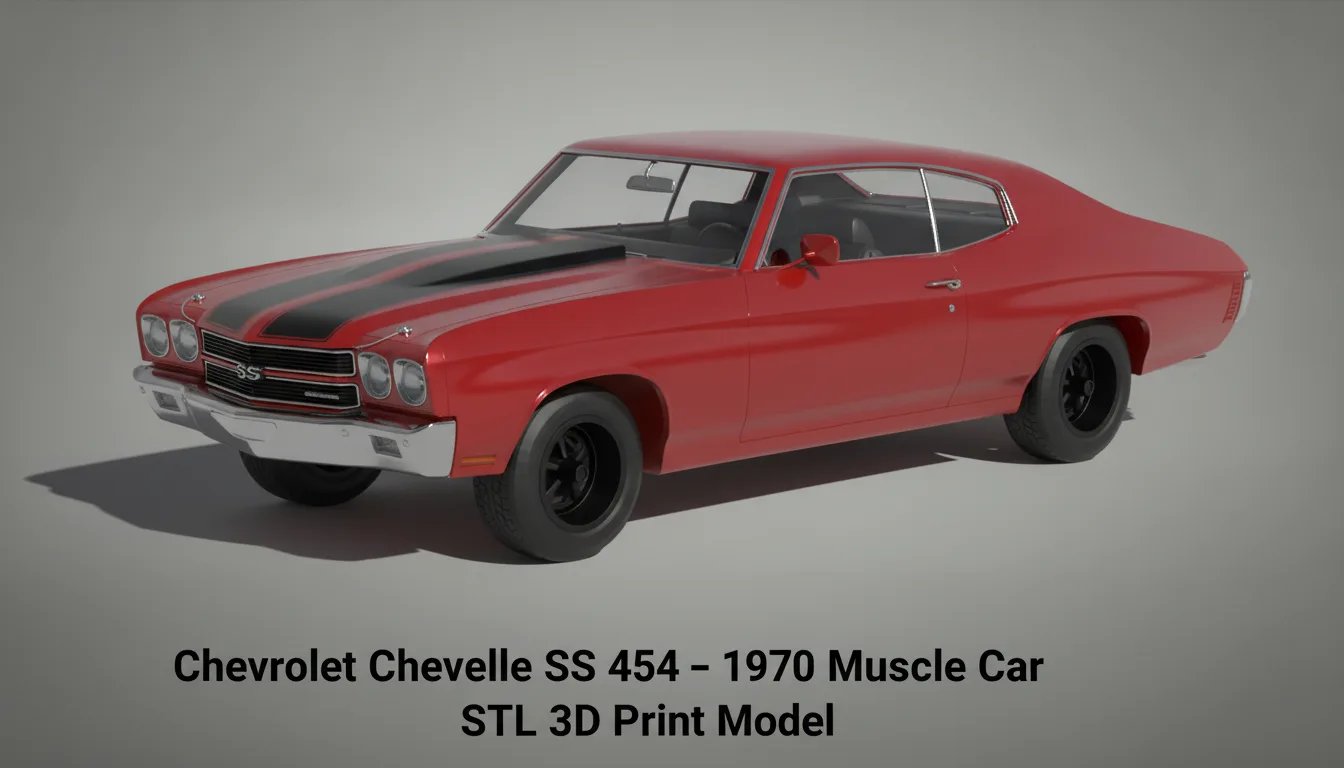
The 1970 Chevelle SS 454 represented the peak of Chevrolet’s mid-size muscle lineup, offering one of the largest and most powerful engines ever installed in a factory muscle car. Its clean, muscular bodywork and twin-domed hood made it an instant icon of the era.
This design highlights the Chevelle’s broad shoulders and purposeful stance, details that translate beautifully into a painted miniature. It’s a strong representative of GM’s big-block philosophy and pairs well with other Chevrolet designs for comparison builds.
4. Challenger R/T
Dodge’s answer to the pony car wars, the Challenger arrived in 1970 with wide proportions and a long wheelbase that set it apart from its Mustang and Camaro rivals. The R/T trim added performance suspension, bold stripe graphics, and some of the most powerful engine options Mopar offered at the time.
This model captures the Challenger’s distinctive grille and shoulder lines, giving it real presence next to smaller pony cars on a display shelf. It’s a favorite among builders chasing that unmistakable early-1970s Mopar look.

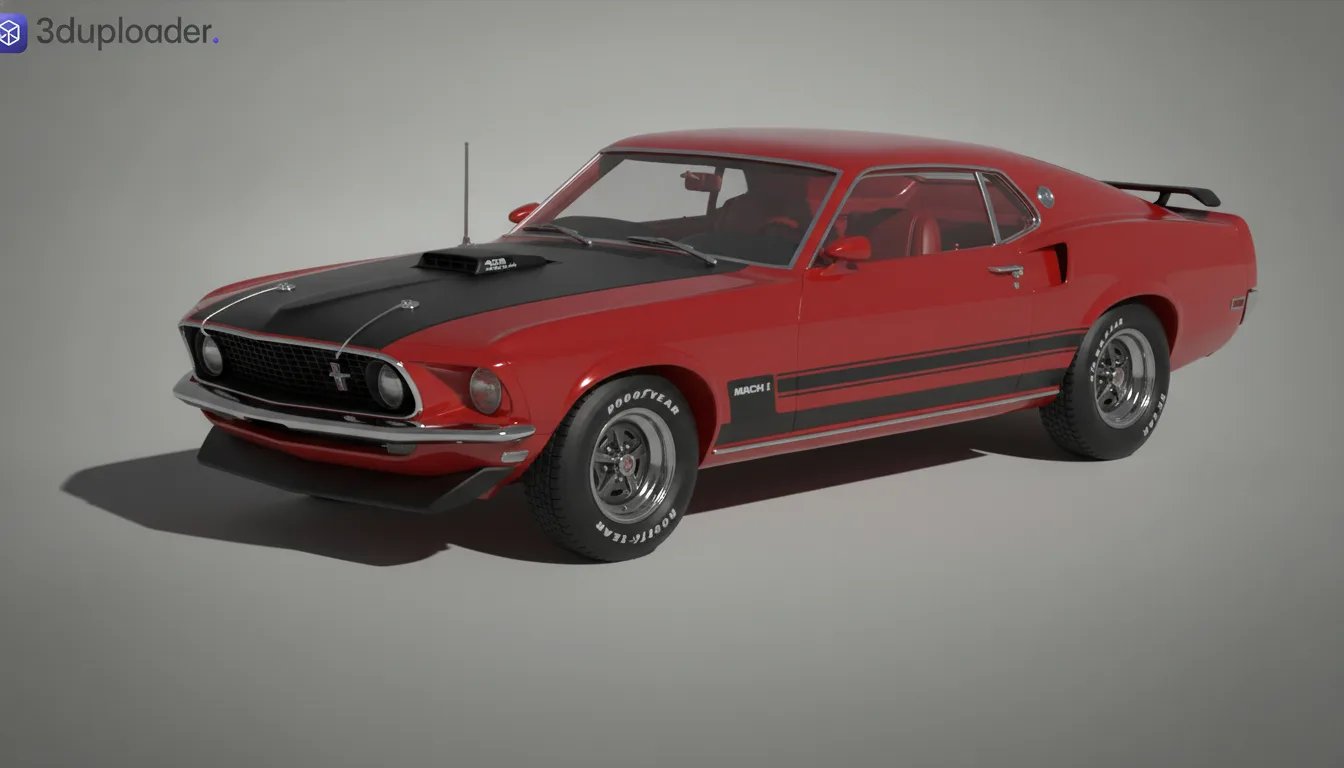
5. Mustang Mach-1 428 Cobra Jet
Introduced in 1969, the Mach-1 combined the Mustang’s sporty fastback shape with serious straight-line performance thanks to the 428 Cobra Jet engine. Reflective side stripes, a matte black hood, and a functional hood scoop gave it a visual identity distinct from other Mustang trims of the period.
This design leans into that distinctive styling, with well-defined hood contours and fastback proportions that make for a dramatic painted finish. It’s a great companion piece to the Boss 302 for builders wanting to show two different sides of the same Mustang generation.
6. GTO Turbo Restomod
Often credited as the car that kicked off the muscle car era in 1964, the Pontiac GTO combined a mid-size body with a big-block V8, a formula every other manufacturer soon copied. This restomod interpretation reimagines that formula with modern turbocharged power and contemporary styling cues layered over classic GTO proportions.
For builders who enjoy customization, this design offers a chance to blend nostalgia with modern performance aesthetics, a nice contrast to the more stock-bodied cars in this lineup. It’s an ideal finishing piece for a shelf that tells the story from muscle car origins to modern reinterpretation.

Printing and painting tips for muscle cars
Muscle cars live or die on their body lines, so getting clean panel gaps and straight character lines out of the printer matters as much as the paint job itself.
Best for builders chasing crisp badge details, grille textures, and tight panel lines on smaller scales.
Good for larger display scales where strength and speed matter more than microscopic surface detail.
Classic automotive lacquers or enamels give that deep, glossy "wet look" ideal for candy colors like Plum Crazy or Grabber Orange.
A light wash in the grille and wheel wells adds realism without overdoing the factory-fresh look most muscle cars deserve.
Don’t skip the primer stage
Muscle car bodies have large, flat panels where layer lines or minor resin imperfections are easy to spot. A sanding primer in gray or white helps reveal flaws before the color coat goes on, saving you from repainting later.
A few practical habits to keep in mind:
- Orient the model to minimize visible supports on hoods, roofs, and fender tops.
- Sand horizontal panels in the direction of the body line, not against it.
- Mask chrome trim and grille elements separately before applying body color.
- Use a gloss clear coat on dark colors to get that deep automotive shine.
- Dry-fit wheels and any separate parts before gluing to confirm alignment.
Frequently Asked Questions
What scale are these muscle car STL models printed at?
Scale depends on how you slice the file and the printer’s build volume. Many hobbyists print these designs at common display scales like 1:24 or 1:18, but the STL itself can typically be scaled up or down to fit your printer and shelf space.
Which is better for muscle cars, resin or FDM?
Resin printers generally produce finer detail on badges, grille mesh, and body lines, which matters a lot on cars with lots of chrome trim and sculpted surfaces. FDM is a solid, faster option for larger display pieces where ultimate surface detail is less critical.
Do I need an airbrush to get good results on these models?
An airbrush helps achieve smooth, even coats and realistic metallic or candy finishes, but careful hand-brushing with thin, multiple coats can also produce good results, especially on smaller detail areas like engine bays and interiors.
Can I mix brands like Ford, Chevrolet, and Mopar in one display?
Absolutely. Many collectors enjoy building a mixed shelf that tells the story of the muscle car wars, placing rival models from Ford, Chevrolet, Dodge, Plymouth, and Pontiac side by side to compare their styling philosophies.
Are these designs based on real production specifications?
Each design is modeled after a specific real-world muscle car, reflecting its body style and era-correct styling cues, making them suitable references for builders who care about historical accuracy.
Final Thoughts
These six designs trace a vivid arc through muscle car history, from the GTO’s genre-defining debut to the raw big-block power of the Chevelle SS 454 and the street-fighting specials from Mopar and Ford. Together they offer enough variety in brand, body style, and attitude to anchor a serious muscle car display, while still leaving room to expand into convertibles, restomods, or race-inspired variants down the line. Fire up the slicer, pick your favorite era, and start building your own slice of the golden age of American horsepower.